- Home
- Thermal Imaging
- Handheld Thermal Imaging Monoculars
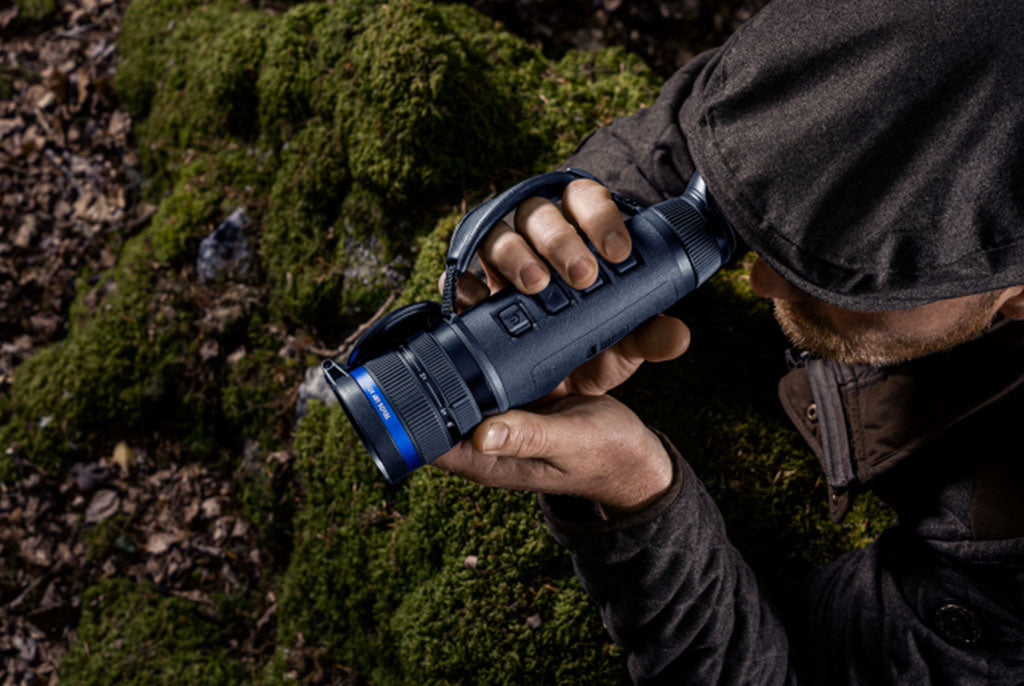
- Pulsar Telos LRF XP50 Thermal Imaging Monocular
1
/
of
7
Pulsar Telos LRF XP50 Thermal Imaging Monocular
Regular price
£2,499.95
Regular price
£2,949.95
Sale price
£2,499.95
£2,083.29 (ex. VAT)
Save £450.00
Sold out
In stock
Coming Soon
Taxes included.
SKU: Product code: PUL-TELOS
The new Pulsar Telos XP50 hand held thermal imaging monocular has a very sensitive sensor that can see heat even in bad weather. It also has a powerful lens that can see objects very far away.
- 640x480 thermal sensor
- Sub 18mk NETD sensitivity
- Up to 1800 metre detection
- 2.5x to 10x Variable Mag
- Zoom adjustment ring behind front focus
- F50/1.0 Fast Lens system
- Wireless recharging
- Adaptable for left and right handed user
Quantity
Couldn't load pickup availability
- X (Twitter)
Share

Collapsible content
Further Information
The new Pulsar Telos XP50 LRF hand held thermal imaging monocular has a very sensitive sensor that can see heat even in bad weather. It also has a powerful lens that can see objects very far away.
Here is a breakdown of the technical specs:
- 640x480 resolution: This means that the image is made up of 640 pixels across and 480 pixels down, for a total of 307,200 pixels. This is a very high resolution for a thermal imager, and it will result in very clear and detailed images.
- 17 microns pixel pitch: This means that each pixel in the sensor is 17 microns wide. A smaller pixel pitch means that the sensor can detect smaller differences in temperature, which results in a better image.
- Sub 18mk NETD: NETD stands for Noise Equivalent Temperature Difference. It is a measure of how sensitive a thermal imager is to small differences in temperature. A lower NETD means that the imager is more sensitive and can produce better images in low-light conditions.
- F50/1.0 germanium lens: This is a very powerful lens that can let in a lot of light. This is important for thermal imaging, because it allows the imager to see objects in low-light conditions.